
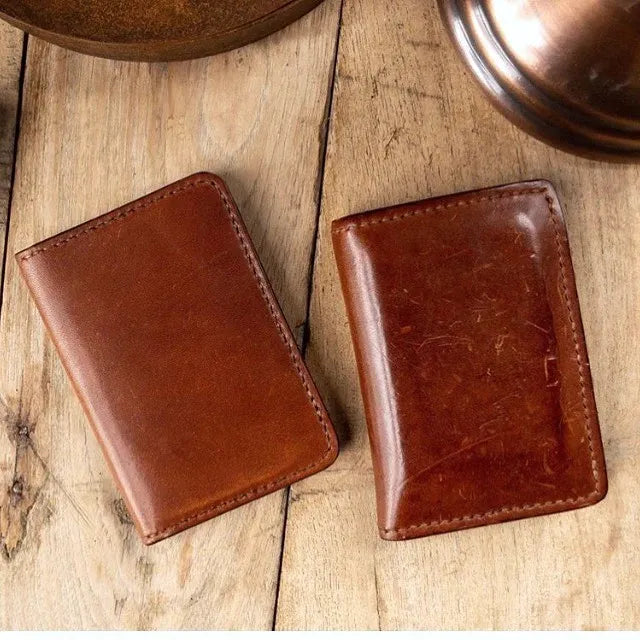
What is Patina? Why Does Vegetable-Tanned Leather Get More Beautiful with Time?
Some products wear out over time. Others "mature" over time. Vegetable-tanned leather belongs precisely to this second group: the surface that looks "clean and raw" on the first day deepens, darkens, shines, and gains a unique character with use. This transformation is called patina.
Patina is not a method to hide flaws. On the contrary, it is the clearest "signature of quality" that good leather and proper tanning provide over time. In other words, patina is not the aging of leather, but the maturation of leather.

What Does Patina Express?
Patina is the state where the depth of color, tonal transitions, luster, and traces of use on the leather surface evolve into an aesthetic whole over time. The important thing is: Patina is not "random dirt." In the right leather and with the correct finish, patina occurs due to the natural reaction of the fiber structure and tanning chemistry, rather than the surface getting dirty.
That's why some leathers are used for years but don't develop a "beautiful" patina. Others gain noticeable character within a few months. The difference often lies not in the "genuine leather" label, but in the tanning method, dyeing/finishing type, and the extent to which the surface is left natural.
How Does Patina Form? The Science (Simple Yet True)
Patina formation occurs with the combination of several basic factors:
1) Oxidation (Contact with air)
As the leather surface comes into contact with oxygen in the air, especially in vegetable tanning, tannins and oils absorbed into the leather react over time. These reactions contribute to the color "settling" and darkening.
2) UV and light (Sun exposure)
Sunlight transforms the surface tone of leather. This effect is more pronounced in vegetable-tanned leathers. Some areas receive more light, some less. This enhances tonal transitions, creating the "deep" appearance of patina.
3) Oils and contact (Hand oils, friction, use)
Natural oils from hands settle into the fibers on the leather's surface. Areas that are frequently touched become darker and shinier over time. This is why patina is essentially a record of how the product has been used.
4) Polishing by friction (Burnishing effect)
Areas like the corners of a wallet, the opening of a case, or the edges of a flap gain a natural shine as they experience friction. This shine looks more like it's been polished rather than "oiled." Quality vegetable-tanned leather reveals itself here: the shine looks natural, not plastic.
Why is Vegetable-Tanned Leather Superior for Patina?
Vegetable tanning stabilizes leather with plant-based tannins. These tannins give the leather's fiber structure a different kind of "memory": the leather holds its shape better, becomes more densely fibrous, and is more prone to color transformation over time. Furthermore, since vegetable leathers are often used with more natural finishes, the surface "breathes," and patina develops more easily.
Chrome tanning, on the other hand, is usually produced very quickly, and in most products, the surface is protected with more opaque finishes. This doesn't mean it's bad; chrome tanning also has advantages like softness and color stability. But when it comes to patina, vegetable leather often has a stronger potential in terms of natural aging character.
Does Patina Occur on All Leather? No.
The word patina is used everywhere because it's popular, but the truth is: Patina performance is largely related to how "natural" the leather's surface is left.
Surfaces that enhance patina
-
Aniline / semi-aniline dyes (more natural, more open surface)
-
Minimum coating (so the leather's pores don't close)
-
Wax/oil-based natural finishes (structure that allows the leather to age)
Surfaces that suppress patina
-
Heavy pigment coating (top layer that looks like paint)
-
Protective film layers that feel like plastic
-
Excessively "stain-resistant" surfaces (yes, sometimes stain resistance kills patina)
Therefore, for someone looking for patina, the best choice might not be the "brightest and most flawless-looking" leather. On the contrary, patina is often the reward of the most naturally left leather.
When Does Patina Look Good, and When Does It Look Bad?
Two things are important for patina to look good: material quality and use scenario.
Good patina usually looks like this:
-
Tonal transitions are soft, stains don't look "messy"
-
Depth develops on the surface (not a single flat color)
-
Luster is controlled, doesn't shine like plastic
-
Traces of use look "characterful" not "worn out"
Bad patina usually results from these mistakes:
-
Wrong care (excessive oiling, wrong chemicals)
-
Interference over an unsuitable coating (leather cannot breathe)
-
Low-quality surface finish (stains look patchy)
-
Incorrect use conditions for the product (leaving it wet, intense chemical contact)
Patina is not "uncontrollable," but it's not "completely manageable" either. That's the beautiful part: patina is how a product becomes personal.
Can Patina Be Accelerated? Yes, But I Don't Recommend It.
The internet is full of patina acceleration tactics: leaving it in the sun, applying oil, pressing wax, even strange rituals like wiping with coffee. Technically, some methods can quickly darken the color. But this often disrupts the leather's natural aging balance and makes the surface look "forced."
Patina is valued in the luxury segment because it is "organic." The moment you start forcing it, that luxury feel disappears. Fast patina gives quick results; but most of the time, it does not give good results.
Proper Care: The Way to Preserve Patina Without Ruining It
For a user who desires patina, the goal of care should not be "keeping the leather new" but keeping the leather healthy.
Basic principles
-
Protect from water and chemicals: Wipe if wet, dry naturally, do not place on heaters.
-
Do not over-care: Applying oil/wax too often chokes the surface.
-
Use the right product: Neutral care products suitable for leather.
-
Allow contact areas to shine naturally: That shine is the signature of patina.
The most common mistake
Constantly applying oil, thinking the "leather has dried out." The natural texture of vegetable-tanned leather settles over time anyway. Too much oil can make the surface heavy and enlarge stains.
New Loco's Perspective: Patina is Not a 'Feature,' It's a Matter of Character
New Loco's approach is simple: to produce leather products not for "day one," but for years. This is also why vegetable-tanned leather is preferred. Because vegetable-tanned leather is not only durable; it personalizes the product by changing with the user over time.
This brings two important things:
1) Every piece is unique. Even with the same model and same leather, no two products will develop the same patina.
2) Patina is not a way to 'hide flaws,' but a way to make quality visible. Cheap material wears out when it ages. Good material gains character when it ages.
And here's a critical distinction: Patina is not the romanticism of "neglect." Patina is the natural result of the right material, the right finish, and the right use.
Conclusion: Patina is the Real Luxury Test of a Leather Product
What makes a product luxurious is not the immediate feeling it gives in the store. The real test is how the product looks after 6 months, 2 years, 5 years. Vegetable-tanned leather is one of the rare materials that can pass this test. Patina is the visible result of this test.
In short:
Leather products are divided into two categories.
Some wear out.
Some live with you.
Patina is the silent but powerful evidence of that second group.

Paylaş:
The Real Difference Between Hand Sewing and Machine Sewing